Kempegowda International Airport, Bangalore
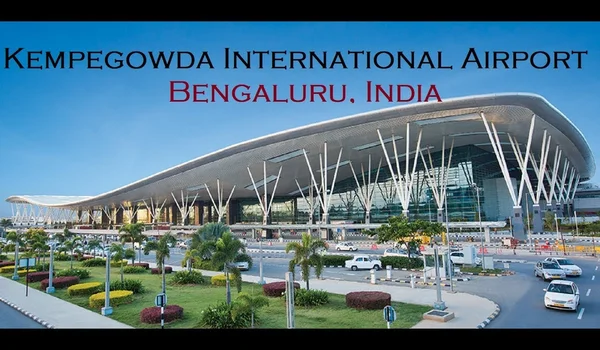
The Kempegowda International Airport, Bangalore, is the main airport of the capital of Karnataka. It is 34 kilometres from the centre of the city and is in Devanahalli, North Bangalore. It is on an area of more than 4000 acres. The airport is the country’s third-largest. It has helped connect the city to the rest of the world.
It is about 30.5 kilometres from the latest pre-launch project by Sobha Limited, Sobha World City. The 48-acre luxury apartment enclave can be reached via SH104. It takes about an hour, which is comfortable for people living in the project.
Quick facts about Kempegowda International Airport
| Item | Detail |
|---|---|
| Location | Located in Devanahalli, approximately 40 km north of Bangalore city center. |
| Airport Code | BLR (IATA) / VOBL (ICAO) |
| Terminal 2 Fame | Known as the "Terminal in a Garden," it was awarded the UNESCO Prix Versailles for its bamboo-clad interiors and hanging gardens. |
| Runway Capability | The first airport in South India to operate independent parallel runways, allowing two flights to land or take off simultaneously. |
| Passenger Traffic | Handled approximately 41.88 million passengers in the fiscal year 2024-25. |
| Sustainability | It is the first airport in Asia to achieve Level 5 Airport Carbon Accreditation (ACA), running fully on renewable energy (solar & wind). |
| Cargo Speciality | India's No. 1 airport for perishable exports, handling the largest volume of roses and mangoes for global export. |
| Future Connectivity | The upcoming Blue Line Namma Metro will connect the airport directly to Central Silk Board (via KR Puram) by 2026. |
The airport is named in honour of Kempe Gowda I, the ruler who founded the city. The location of Kempegowda International Airport, Bangalore, is in the north. The wide Bellary Road links the city to it. The phone number of the airport is 080667 85555. The modern airport offers direct flights to five continents and connecting flights to all six.
The air-conditioned Vayu Vajra buses run by the BMTC ply the route regularly. It is a punctual service that reaches different areas in the city. There are also a lot of cabs that go to and from the airport. The metro's Blue Line to the airport is under construction. Once ready, it will make the commute much easier and faster.
The air terminus is owned and operated by BIAL (Bengaluru International Airport Limited). The group has been given the right to operate the airport for 30 years. IT was officially opened in May 2008. It has two runways that handle large numbers of flights.
The airport is India’s third busiest airport, after Delhi and Mumbai. It is 26th on the list of Asia’s most busy airports. As of 2024, it is the 54th busiest airport globally. It sees the arrival and departure of over 750 domestic and international flights every day.
There are two terminals in the airport, which are around 600 metres apart. These are:
- Kempegowda International Airport Terminal 1: The terminal is over anarea of 1,620,570 square feet. It handles flights to other parts of the country. Airlines like Air India, IndiGo, and Akasa Air use it.
- Kempegowda International Airport Terminal 2: The terminal is much larger. It is on an area of around 2,740,000 square feet. It is a modern space that showcases Bangalore’s Garden City title. It handles flights to all parts of the globe. International airlines like Emirates, Qatar Airways, and Lufthansa use it.
Both terminals are well-planned to offer comfort and an easy travel experience. There is a free bus service for passengers to be able to move between terminals. These leave from designated pick-up points. They are available at all times, through the day and night.
Future Developments & Technology
The modern Kempegowda International Airport, Bangalore, uses the most technology. A new ATC tower is now being built at the airport. It is scheduled to be ready by 2027. It is being built to handle the increased air traffic here.
Other facilities at the airport include the provision to do self-check-ins. Passengers can use the Digi Yatra app to make the process simpler. CT scanners are used in Terminal 2 for screening baggage. It has amped up the levels of security here.
Flight Information
The flight schedules of Kempegowda International Airport, Bangalore, can be found online. These are also on the large display boards at the terminals. These show the times of arrival and departure. Details like gate numbers and boarding times are also shown.
Passenger & Cargo Statistics
The airport sees the movement of large numbers of passengers every year. In FY2024-25, it handled more than 41.87 million passengers. Cargo services have also grown, and the airport handled 502,509 tonnes in the same period. It is an important cargo hub in the south of the country.
Airline Hubs
The airport is a hub for Air India, DHL Aviation, Alliance Air, FedEx, and Star Air. It is an operating base for Akasa Air, Air India Express, and Indigo.
Design & Amenities
Photos of Kempegowda International Airport, Bangalore, show its design. It is an aesthetically pleasing space that is laid out to be comforting and relaxing. It is designed to bring down the stress of travel. There are luxury lounges that are perfect for resting. Many food outlets offer a wide array of food. There are also shops, retail and duty-free.
Sustainability Initiatives
The airport is developed by CleanMax Solar. It is the first in Karnataka to run on solar power. The Kempegowda International Airport Bangalore map shows an 11-acre fuel farm. Having a fuel farm here helps bring down pollution caused by the transport of fuel.
Kempegowda International Airport: January 2026 Updates
The Bengaluru airport has seen a busy start to 2026. From record passenger numbers to new construction updates, here are the 8 key things you need to know this month.
- More Passengers Than Ever The final numbers for 2025 are in, and they are huge. The airport served about 43.8 million passengers last year. This is an 8% jump from the year before. The rush is real, and it shows just how many people are moving to and travelling from Bangalore these days.
- The Hunt for the Second Airport The government is very close to picking a spot for a second airport. Right now, they are looking at three main areas: Kanakapura Road, Nelamangala, and Tumakuru Road. A final report is expected soon. This new airport is necessary because the current one will likely be full within the next seven years.
- Airport Metro Update If you are waiting for the Blue Line Metro to the airport, the timeline has been updated. The goal is to finish construction by December 2026. While you can see the pillars coming up fast along the Outer Ring Road, regular passenger rides will likely start in 2027.
- Old Terminal Getting New Life /Now that Terminal 2 (the "Garden Terminal") handles international flights, Terminal 1 is getting a makeover. The plan is to upgrade it completely for domestic flyers. The renovation aims to make T1 capable of handling 35 million people a year. Work is on track to finish later this year.
- Air India’s Big Repair Hub Air India is building a massive maintenance center (MRO) right at the airport. Construction is moving quickly, and it should open by mid-2026. Once it is ready, Air India can fix its planes here instead of sending them abroad. This is great news for local jobs.
- Cargo Business is Booming It is not just passengers; the airport is moving more goods than ever. In 2025, it handled over 520,000 tonnes of cargo. This includes everything from fresh roses sent to Europe to computer parts coming in for tech companies.
- New Direct Flights Travelling abroad has become easier. In late 2025, airlines added more direct flights to popular cities like London, Singapore, and Phuket. Daily international departures have gone up, so you have more choices without needing a layover in Mumbai or Delhi.
- Face Scan for International Travel The "DigiYatra" face-scan system has been a hit for domestic flights. Now, the airport plans to test it for international travel in 2026. The goal is to speed up the immigration lines so you can get to your gate faster.
Summary
Bangalore's Kempegowda International Airport is well-planned and has an array of the best services. It is laid out to make travel pleasant and stress-free. It is a grand entrance to the city and welcomes all visitors to it with warmth.
Frequently Asked Questions about Kempegowda International Airport (BLR)
Shopping here is actually quite fun. If you are in the new Terminal 2, it feels like a mall. You can buy luxury perfumes, electronics, and chocolates at the Duty-Free section. There are also popular brands like Hamleys, Swarovski, and FabIndia. Even in the older Terminal 1, you have plenty of souvenir stores to grab a quick gift before your flight.
Right now, you cannot take the metro all the way to the gate. The direct "Blue Line" station is still being built. For now, most travelers take the Vayu Vajra buses or a taxi to get to the city. The closest working metro stations are quite far inside the city limits.
It is a bit of a trek. The airport is about 40 kilometers north of the city center (MG Road). In Bangalore traffic, this drive usually takes about an hour and a half. If you are coming from Whitefield or Hoskote, taking the back roads can sometimes save you time.
It is located in Devanahalli, which used to be a quiet village. Now, it is a booming area. Because of the airport, this whole zone has turned into a busy hub with business parks and the new Aerospace Park coming up nearby.
Think of them as the old and the new. Terminal 1 (T1) is the original building that handles most domestic flights like Indigo. Terminal 2 (T2) is the shiny new building that handles all international flights and premium domestic ones like Air India and Vistara.
The vibe is completely different. T1 is functional—it gets the job done. T2 is an experience. It is built with bamboo and thousands of plants to look like a garden. T2 is also much bigger and uses newer technology, so lines often move faster there.
People call it the "Terminal in a Garden." It was designed to show off Bangalore's reputation as the Garden City. Instead of just concrete and steel, you will see hanging plants, waterfalls, and lush greenery everywhere inside.
It is super easy and free. You don't need to walk on the road. There is a shuttle bus that runs 24/7 between the two buildings. It comes every 10 minutes. Just look for the signs, hop on, and you will be at the other terminal in less than 10 minutes.
They are close, only about 600 meters to 1 kilometer apart. But you can't walk across the runway area, so you have to take the bus or drive around the loop if you have your own car.
It is not owned by a single person. It is run by a group called BIAL. This is a mix of private companies (like Fairfax) and the government. They work together to manage everything from the runways to the shops.
Yes, it is huge. The whole area covers over 4,000 acres. That is large enough to fit two massive terminals, a cargo village for goods, and two full runways, with plenty of space left for future expansion.
Yes, you can! If you have a long wait, head to the 080 Lounge or the transit hotel. They have clean shower rooms you can pay to use. It is a lifesaver if you want to freshen up after a long flight.
The airport has two runways that run parallel to each other. This is a big deal because it means two planes can land or take off at the exact same time, which helps prevent flight delays.
Explore More




| Enquiry |